



Esta página ha sido redactada, editada, revisada y aprobada por Rubén Davidoff siguiendo nuestro exhaustivo directrices editoriales Ruben Davidoff, El socio fundador cuenta con más de 30 años de experiencia legal como abogado especializado en lesiones personales en Nueva York.

At Davidoff Law, we handle pedestrian injury claims arising from delivery robots. These self-driving delivery robots, like Amazon Scout, are becoming common on city sidewalks and streets. Advances in technology make last-mile food delivery and package delivery easier, but they also create new risks for pedestrians. Pedestrian injuries caused by delivery robots can include broken bones, head trauma, and soft tissue damage. Our abogados especializados en lesiones personales help injured pedestrians seek compensation for medical bills, lost wages, and property damage.
Índice
The use of autonomous delivery robots is growing across New York and the US, including in Manhattan, Brooklyn, and on campuses such as Northern Arizona University. While the robots offer convenience and food delivery promo codes, their presence in public spaces raises safety concerns. Pedestrian accident cases often involve complex liability issues, and our legal team is experienced in investigating and handling these claims.
The Rise of Delivery Robots and Their Role in Urban Environments
Delivery robots have grown rapidly in the last few years as cities and companies look to improve last-mile delivery. Autonomous delivery robots can lower costs, reduce delivery times, and operate efficiently for small food orders, groceries, and packages. They are increasingly seen on city sidewalks, in designated bike lanes, and around university campuses, such as Northern Arizona University and Arizona State University.
However, their presence also creates safety concerns for pedestrians, e-bikes, and other vehicles. We advise clients on legal options when accidents happen, and investigate whether companies or operators should be held accountable for injuries caused by these machines.
Types of Pedestrian Injuries Caused by Delivery Robots

Pedestrian injuries from sidewalk delivery robots can happen in several ways. Understanding how these injuries occur helps injury victims pursue fair compensation and protect their legal rights.
Injuries from Collisions with Delivery Robots
Pedestrians can be struck by self-driving delivery robots while walking on city sidewalks or public spaces. Collisions may cause huesos rotos, bruises, or cuts, and sometimes more serious injuries if a person falls into streets or bike lanes. We investigate the incident, gather evidence such as video footage and police reports, and review the robot’s operational and maintenance records. Factors such as the robot’s speed, design flaws, and whether it was properly maintained help determine liability. Our legal team works to hold companies or operators responsible for causing harm.
Injuries from Sudden Stops or Unexpected Movements
Sidewalk autonomous delivery robots may stop abruptly, swerve around obstacles, or make sudden turns. These unexpected movements can cause pedestrians to trip, fall, or collide with nearby vehicles or other sidewalk users. Injuries from these incidents can include sprains, fractures, or head trauma. We collect new evidence, including photos of the accident scene and witness statements, to assess negligence. Our goal is to pursue compensation for medical expenses, lost wages, and property damage resulting from these accidents.
Psychological and Emotional Trauma from Robot Encounters
Pedestrian accidents involving delivery robots can also cause psychological and emotional trauma. Injured pedestrians may develop anxiety about walking near sidewalks, bike lanes, or public roads where delivery robots operate. Fear and stress from repeated incidents can affect daily life and work. We document these effects and include them in a personal injury claim. Our law firm helps victims seek compensation for both physical and emotional harm caused by autonomous delivery devices.
Why Delivery Robots Pose a Unique Risk to Pedestrians
Delivery robots operate in environments that challenge human judgment and pedestrian awareness. Sidewalk autonomous delivery robots move slowly but may be overlooked or difficult to spot, especially in crowded areas. Interactions with pedestrians can lead to unexpected collisions, and these robots do not always yield the right of way.
- Autonomous navigation challenges: Robots may struggle with obstacles, moving people, and dynamic sidewalks.
- Lack of human judgment: Robots cannot anticipate sudden pedestrian movements or judge intent.
- Pedestrian interaction issues: Sidewalk users may collide with robots that do not yield or stop in time.
- Visibility concerns: Even slow-moving robots can cause trips or falls if ignored.
We investigate these risks and help injured pedestrians understand their legal rights.
Who Is Liable for Pedestrian Injuries Involving Delivery Robots?
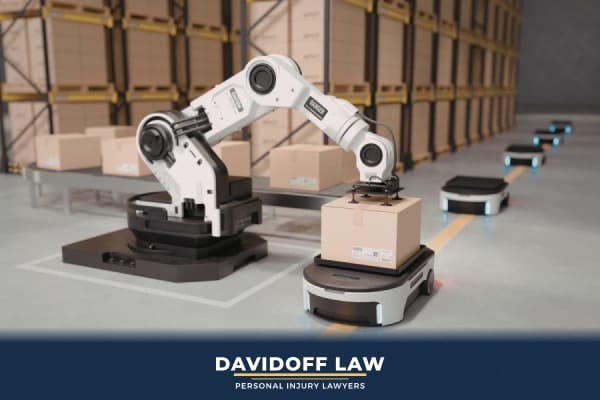
Liability for pedestrian accidents involving delivery robots can be complex. Determining responsibility often depends on the robot’s operation, design, and the environment where the accident occurred. We review evidence and provide legal guidance to injury victims considering a personal injury claim.
Liability of the Company Operating the Robot (e.g., Amazon)
Companies that operate delivery robots are often responsible for accidents caused by their devices. Operators must ensure robots are properly maintained and follow safety protocols while delivering food orders or packages. If a robot causes injuries on public sidewalks, the company may be held responsible for medical care and other damages. We gather evidence, including video footage and police reports, to demonstrate the operator’s negligence. Our legal team helps injury victims pursue compensation and hold the responsible company accountable.
Manufacturer Liability for Robot Design or Malfunction
Manufacturers of self-driving delivery robots may be liable if a design flaw or malfunction contributes to pedestrian injuries. Examples include braking failures, sensor errors, or software glitches that lead to collisions. We investigate whether the robot operated correctly and if the manufacturer failed to meet safety standards. Injured pedestrians may file a personal injury lawsuit to recover medical bills and other damages. We provide legal guidance throughout the legal process to ensure victims are held accountable for the harm caused.
Potential Liability of Local Authorities for Inadequate Infrastructure
Local governments may share liability if poorly designed sidewalks, bike lanes, or public spaces contributed to the accident. Obstacles, uneven surfaces, or a lack of proper signage can increase risks for sidewalk delivery robots and pedestrians. We examine the accident scene and gather evidence to determine whether city infrastructure played a role. Injury victims may pursue compensation from multiple parties, including the company, manufacturer, or public authority. Our law firm helps clients navigate these complex legal questions.
Current Legal Framework for Pedestrian Safety and Autonomous Robots
The legal framework for pedestrian safety and autonomous delivery robots is still evolving. Existing laws generally apply product liability, tort law, and general negligence principles to human operators, manufacturers, or owners.
- Human accountability: Robots are considered objects, and any harm is attributed to the responsible human or company.
- Lack of robot legal personality: Delivery robots cannot be held criminally or civilly liable in their own right.
- Emerging legislation: Some jurisdictions assign an “Authorized Driving Entity” or insurer responsibility for autonomous devices.
- U.S. rules: Agencies like NHTSA regulate autonomous vehicles, but do not have comprehensive laws for sidewalk delivery robots.
- Pedestrian safety challenges: Technical standards and interaction modeling are still developing to ensure the safe coexistence of humans and autonomous robots.
- Systemic liability approach: Some propose that a single entity be responsible for damages, simplifying claims for injured pedestrians.
We help clients understand their legal rights, gather evidence, and pursue legal action to recover compensation after accidents involving personal delivery devices. Our free consultation allows us to evaluate circumstances, identify liable parties, and guide injury victims through the claims process.
How Delivery Robots Are Programmed to Avoid Accidents
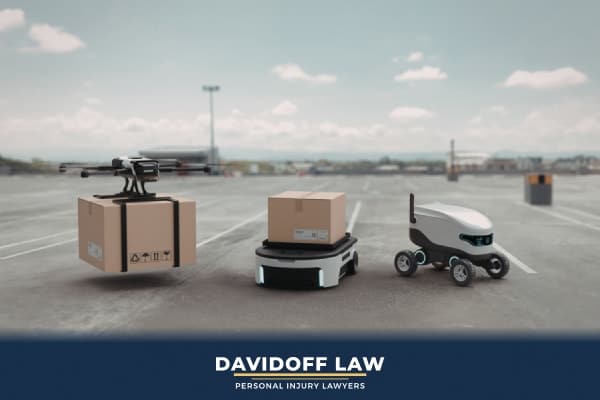
Delivery robots, including those used for food delivery, rely on sensors, cameras, and algorithms to detect obstacles and navigate sidewalks. They can identify pedestrians, motor vehicles, and static objects and adjust their path to avoid collisions. However, challenges arise in crowded areas, poor lighting, or bad weather, where robots may fail to recognize sudden movements.
Current technology cannot fully replicate human judgment or anticipate complex interactions on city sidewalks or campuses like Northern Arizona University. We note these limitations when evaluating liability and advising clients on potential legal action.
- Obstacle detection: Robots use lidar, cameras, and ultrasonic sensors to detect objects.
- Navigation algorithms: AI plans paths while avoiding collisions with pedestrians.
- Limitations: Unexpected pedestrian behavior or environmental factors can still cause accidents.
When Automation Fails: Documented Pedestrian Injuries
Reviewing specific pedestrian accidents in the U.S. reveals critical, recurring safety flaws. These cases go beyond theory, exposing real-world risks in sidewalk navigation, at busy intersections, and in crowded public spaces.
The Suburban Sidewalk "Startle and Fall"
In the New York suburbs, a pedestrian near a self-driving Amazon Scout delivery robot was startled and fell, suffering bruises and minor fractures. The robot moved unpredictably, and the pedestrian could not anticipate its sudden approach. Delivery robots lack human social cues and do not communicate intent. Their software prioritizes obstacle avoidance but does not cooperate with pedestrian movement, creating unclear right-of-way situations. Injuries often occur when pedestrians try to evade these machines, showing that current technology cannot fully ensure sidewalk safety.
Urban Intersection & Right-of-Way Failure
In Manhattan, an autonomous delivery robot struck a pedestrian who was legally crossing at a busy intersection. Limited sensor range and algorithm limitations contributed to the collision. The robot misinterpreted traffic signals and could not predict sudden pedestrian movements. This created a preventable accident, demonstrating that companies operating these robots can be held responsible for pedestrian injuries. We use these cases to help clients pursue compensation for medical care, lost wages, and property damage.
High-Density Zone Incidents (e.g., University Campuses)
On the Northern Arizona University campus, a sidewalk delivery robot collided with a student in a crowded walkway while delivering food. The robot’s presence created tripping hazards for other pedestrians and students navigating tightly packed sidewalks. Simple geofencing or speed limits proved insufficient in these dense areas. Safe operation requires better pedestrian detection and stricter operational rules during peak traffic times. Our legal team highlights these incidents to demonstrate how current U.S. deployment practices can increase pedestrian risk.
Collectively, these incidents point to unresolved challenges in safety protocols and liability. At Davidoff Law, we provide legal guidance to injury victims and explain the following steps for pursuing compensation and holding companies accountable.
Steps Pedestrians Can Take to Protect Themselves from Delivery Robot Injuries
Pedestrians face new risks as delivery robots become more common on city sidewalks. Staying alert and following simple safety steps can reduce the chance of injury. At Ley Davidoff, we advise pedestrians to act responsibly and know their rights if an accident happens.
- Stay alert: Watch for self-driving delivery robots and other moving devices on sidewalks and streets.
- Follow pedestrian rules: Use crosswalks, remain visible, and avoid distractions such as phones or headphones.
- Understand robot right-of-way: Some sidewalk delivery robots may move in ways that require extra caution from pedestrians.
- Report accidents immediately: Notify local authorities and the robot's operator to document the incident and preserve evidence.
- Gather information: Take photos, note the location, and collect witness statements to support a potential personal injury claim.
Compensation for Injury Victims
Pedestrians injured by delivery robots may have the right to seek compensation for losses caused by these accidents. At Davidoff Law, we help injury victims understand the claims process and pursue fair outcomes.
- Medical expenses: Coverage for emergency care, hospital visits, and ongoing treatment.
- Pain and suffering: Compensation for emotional distress and loss of quality of life.
- Lost wages: Reimbursement for time missed at work due to injuries.
- Long-term care: Support for disabilities or ongoing treatment caused by the accident.
- Punitive damages: In cases where the company's or operator's negligence is clear, additional damages may apply.
How Davidoff Law Can Help Victims of Pedestrian Injuries Caused by Delivery Robots

At Davidoff Law, we provide legal guidance and representation for pedestrians injured by delivery robots. Our team understands the technology advances behind autonomous delivery and how these machines can cause accidents.
- Legal representation: We advocate for injured pedestrians and handle negotiations with insurance companies.
- Investigating liability: We examine the circumstances surrounding the accident, including design flaws or operator errors.
- Working with experts: Engineers and technology specialists help prove negligence and liability.
- Ensuring full compensation: We pursue medical expenses, lost wages, and damages for pain and suffering.
- Future protection: Our attorneys advise on steps to prevent future accidents and protect pedestrian safety.
We offer a free consultation to discuss your legal options and help you understand how to hold the responsible parties accountable.
Preguntas frecuentes
Pedestrians increasingly face risks from delivery robots operating on sidewalks and streets. Understanding your legal rights is critical after an accident. At Davidoff Law, we guide clients through the personal injury process and explain the steps to protect their future.
Yes, you can seek compensation for medical expenses, lost wages, and property damage if a robot causes an accident.
Liability may fall on the company operating the robot, the manufacturer, or, in some cases, the property owner where the accident occurred.
Common injuries include broken bones, sprains, cuts, head trauma, and other soft tissue damage.
Local and state regulations govern delivery robots, but legal responsibility generally falls under traditional negligence and product liability laws.
Sometimes, yes. Our attorneys examine all circumstances and gather evidence to show other contributing factors.
Seek medical care, document the accident scene, report the incident, and contact our personal injury attorney for guidance.
Contact Our Delivery Robot Accident Lawyer for a Free Consultation

At Davidoff Law, we provide experienced legal help for pedestrians injured by delivery robots. Our attorneys understand technology advances and how these machines can cause accidents in public spaces. We work to hold responsible parties accountable and pursue fair compensation for injury victims.
We offer a consulta gratuita to review your case, explain your legal options, and help you gather evidence. Whether you face medical bills, lost wages, or long-term injuries, we guide you through the legal process and protect your rights. tel:+19293390722 to ensure your future is secure after a pedestrian accident involving autonomous delivery robots.
Abogados especializados en lesiones personales de Davidoff Law
- 75-60 188th Street, Fresh Meadows, NY 11366
- (718) 900-0000
Abogados especializados en lesiones personales Davidoff Law - Ciudad de Nueva York
- 60 E 42nd Street, Suite 1720, Nueva York, NY 10165
- (212) 900-0000
SOLO CON CITA PREVIA
Abogados de lesiones personales Davidoff Law - Bronx
- 2322 Arthur Ave, 207, Bronx, NY 10458
- (516) 830-0956
Abogado especializado en lesiones personales en Queens Rubén Davidoff
- 108-18 Queens Blvd., Suite 404, Queens, NY 11375
- (718) 268-8800

Rubén Davidoff, fundador de Davidoff Law, estableció su despacho en 2012 tras mudarse a Queens en 1988 y comenzar su carrera jurídica en 1997. Admitido en el estado de Nueva York y en el Tribunal de Distrito de los Estados Unidos para el Distrito Este de Nueva York, cuenta con una amplia experiencia en lesiones personales, habiendo llevado diversos casos como accidentes aéreos, accidentes automovilísticos y casos de resbalones, tropiezos y caídas. El Sr. Davidoff ofrece una atención personalizada y ha recuperado millones para sus clientes a través de acuerdos o veredictos, aprovechando sus décadas de experiencia.


