This page was written, edited, reviewed & approved by Ruben Davidoff following our comprehensive editorial guidelines Ruben Davidoff ,the Founding Partner, has 30+ years of legal experience as a New York personal injury attorney.

Falling merchandise in grocery stores can cause serious injuries and lead to significant medical expenses and lost wages. Each year, thousands of shoppers suffer fall injuries due to improperly secured items or hazardous conditions in retail stores. Victims of these accidents may be entitled to recover compensation through a personal injury claim. At Davidoff Law, we are an experienced personal injury law firm specializing in premises liability cases. We help injury victims navigate the legal process and seek fair compensation for medical bills, rehabilitation costs, and emotional distress.
Table of Contents
Understanding Injuries Caused by Falling Merchandise in Grocery Stores
Falling merchandise can cause a wide range of injuries, from minor bruises to serious physical trauma. Prompt medical attention is crucial to reduce complications and document injuries for a legal claim. We guide victims through the process of seeking immediate medical attention, maintaining records, and protecting their legal rights.
Common Types of Injuries
- Traumatic brain injuries (TBIs) from heavy items striking the head
- Broken bones in arms, legs, or ribs
- Neck and back injuries from sudden impact or falls
- Contusions, cuts, and lacerations
- Emotional distress caused by the accident
Factors That Contribute to Falling Merchandise Accidents
- Improperly stocked or unsecured shelves
- Overcrowded aisles that make items unstable
- Lack of warning signs or safety measures
- Wet floors or other hazardous conditions
- Store employees are failing to follow proper safety protocols
Premises Liability and Grocery Store Accidents
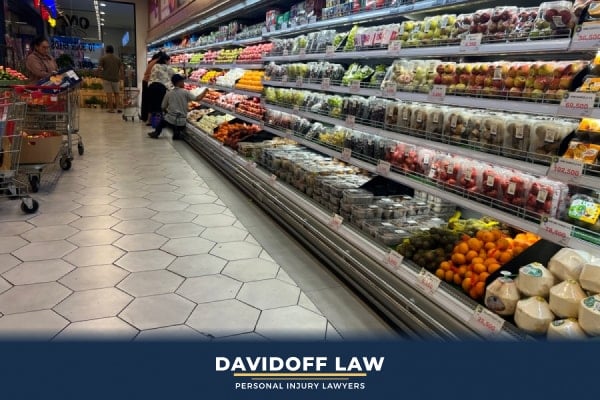
Premises liability law holds store owners and property managers accountable for injuries caused by unsafe conditions. If a store’s negligence caused a fall accident, victims may pursue a personal injury lawsuit to recover medical expenses, lost wages, and other damages. We help clients gather evidence and determine liability to secure compensation for injuries sustained in grocery store fall cases.
Duty of Care in Grocery Stores
Grocery stores have a legal duty to maintain a safe environment for shoppers. This includes:
- Ensuring shelves are properly secured
- Training employees to prevent hazardous conditions
- Promptly addressing wet floors, broken displays, or falling objects
- Maintaining a reasonably safe environment for all customers
Common Safety Standards and Regulations for Grocery Stores
- Regular inspections of shelving units and merchandise displays
- Clear warning signs for wet or slippery floors
- Adherence to industry standards for shelving height and weight limits
- Staff training to prevent hazardous conditions and merchandise falls
- Immediate cleanup and reporting procedures for accidents
Who Is Liable for Injuries Caused by Falling Merchandise?
When a customer suffers injuries from falling merchandise, liability can fall on the store owner, employees, or the product manufacturer. Store management has a legal duty to maintain safe premises and prevent accidents. Property owners may be held responsible if a dangerous condition existed and they failed to act. We help clients understand their legal options and pursue fair settlements in slip-and-fall cases. Our experienced personal injury attorney evaluates each case to hold negligent parties accountable.
Store Owners’ and Managers’ Responsibility for Store Safety
Store owners and managers must maintain a safe shopping environment. They are responsible for ensuring products are properly secured and potential hazards are addressed promptly. Regular inspections and proper training of store employees are essential to prevent grocery store slip accidents. When a store knows about a hazard and fails to act, it can be held liable. We help injury victims document unsafe conditions to support a premises liability claim.
Liability of Employees in Maintaining Store Safety
Employees play a key role in preventing slip-and-fall incidents. They must monitor aisles, restock shelves safely, and alert management to potential hazards. Failing to secure merchandise properly can make employees or the store accountable. We work with clients to gather evidence of employee negligence in grocery shopping areas. Ensuring that all store staff follow safety protocols helps prevent serious injuries.
Legal Process After a Falling Merchandise Injury
Pursuing a personal injury claim after a fall accident requires careful steps. Prompt medical treatment and proper documentation of injuries are essential for building a strong case. Reporting the accident to store management and keeping written incident reports protects your legal rights. We guide clients through the legal process and provide representation to seek compensation for medical bills, lost income, and non-economic damages. Understanding the steps increases the likelihood of a successful claim.
Step 1: Seek Medical Attention and Document Injuries
Victims should seek immediate medical attention, even if injuries appear minor. Medical professionals can assess the injuries and recommend treatment such as physical therapy. Medical records serve as crucial evidence in fall claims and personal injury lawsuits. Future medical treatment and rehabilitation costs should be tracked carefully. We help clients collect and organize these records to strengthen their claim.
Step 2: Report the Incident to the Store and Gather Evidence
Notify the store manager or store employees immediately of the accident. Take photographs of the hazard, merchandise, and surrounding area to document the unsafe condition. Gather witness statements and request a written incident report from store management. Surveillance footage can provide strong evidence of the fall accident. We assist clients in gathering all evidence needed to prove the store’s negligence.
Proving Liability in Falling Merchandise Injury Claims
To succeed in a falling merchandise case, we must show that the store or employees were legally responsible. Evidence of hazardous conditions and the store’s failure to maintain safe premises is critical. Clear documentation helps establish that the accident was caused by store negligence. We review store claims and assess common defenses that may arise in court. Our experienced attorney uses their combined experience to hold stores accountable.
Importance of Evidence in Proving Your Case
- Surveillance footage of the accident
- Written incident reports and maintenance records
- Medical records and documentation of physical pain or therapy
- Witness statements from other customers or store employees
- Photos of the hazard and the surrounding environment
Role of Witnesses in Supporting Your Claim
Witnesses can confirm how the fall occurred and the dangerous condition that existed at the time. They may provide testimony on the store manager’s actions or inactions. Witness accounts strengthen a premises liability claim and help prove the store knew about the hazard. We coordinate with witnesses to gather clear evidence to support a successful claim.
The Role of Insurance in Falling Merchandise Injury Claims

Insurance companies often handle the financial aspects of grocery store slip-and-fall cases. Understanding the store’s insurance coverage is crucial for recovering compensation. Both the store’s insurance and property owner’s policies may cover medical expenses, lost income, and non-economic damages. We guide clients through interactions with insurance providers to avoid pitfalls and ensure fair settlement offers. Proper legal representation improves the chances of recovering compensation for injuries sustained.
Does the Store’s Insurance Cover Falling Merchandise Injuries?
Most retail stores have general liability insurance to cover falling object accidents. Coverage typically includes medical treatment, rehabilitation costs, and property damage. However, insurance companies may dispute claims or offer lower settlements. We review policy limits and advise on the best approach to secure compensation.
Pursuing Claims Against the Store’s Insurance Company
Filing a claim with the store’s insurance company requires careful documentation of the accident and injuries. Insurance adjusters often investigate the premises and may attempt to limit payouts. We represent clients in negotiating fair settlements and ensuring that all economic and non-economic damages are included. Our experienced personal injury lawyers advocate for injury victims to hold stores accountable.
Compensation Available for Falling Merchandise Injury Victims
Victims of falling merchandise in grocery stores may pursue compensation for injuries resulting from a slip-and-fall accident. Compensation can cover medical expenses, lost income, and pain and suffering. It ensures victims can recover costs for treatments and future medical care. We help clients understand their legal rights and seek fair compensation. Our experienced personal injury attorneys guide clients through the claims process.
Medical Expenses and Treatment Costs
- Hospital bills and emergency care
- Physical therapy and rehabilitation
- Future medical treatment related to the slip and fall accident
- Prescription medications and ongoing medical care
Lost Wages and Lost Earning Capacity
Victims can recover lost income from missed work due to the injury. Compensation may also account for reduced earning capacity if the accident affects long-term employment. We review medical records and employment documents to calculate lost wages. Our team ensures clients are fully compensated for income loss.
Pain and Suffering Damages
Victims may seek damages for physical pain and emotional distress caused by the accident. Non-economic damages include mental anguish, fear, and lifestyle changes. We work to secure compensation that reflects both economic and non-economic impacts. Our goal is to help clients fully recover from the harms they have suffered.
Statute of Limitations for Personal Injury Claims in New York
In New York, victims of falling merchandise accidents have a limited time to file a personal injury claim. Understanding these time limits is critical to protect legal rights. Acting promptly ensures all evidence is preserved and strengthens the case. We guide clients to file claims within the legal deadlines. Our experienced personal injury attorneys handle all aspects of the process.
Time Limits for Filing a Personal Injury Lawsuit
Victims generally have 3 years from the date of the slip-and-fall accident to file a lawsuit. Filing within this period is essential to avoid losing the right to compensation. We ensure clients act promptly to preserve evidence and legal options.
Exceptions to the Statute of Limitations
In certain cases, such as those involving minors or government entities, filing deadlines may be extended. We review each client’s circumstances to determine the correct timeline. Acting promptly allows us to prepare a strong premises liability claim.
How Davidoff Law Can Help You With Your Falling Merchandise Injury Case
We provide legal representation to victims of slip-and-fall accidents in grocery stores. Our team helps gather evidence, document injuries, and negotiate with insurance companies. We aim to secure both economic and non-economic damages for medical expenses, lost income, and pain and suffering. Our experienced personal injury attorneys guide clients through every step of the legal process.
- Expertise in personal injury and premises liability cases in grocery stores
- Negotiating with insurance companies to secure a fair settlement
- Free consultation and case evaluation to review your slip and fall accident
- Guidance on gathering crucial evidence like medical records, surveillance footage, and incident reports
Frequently Asked Questions (FAQs)
We advise seeking medical attention immediately, reporting the accident to store management, and gathering evidence such as photos, witness information, and surveillance footage.
Liability can fall on the store owner, store employees, or the manufacturer of the display equipment, depending on who failed to maintain a safe environment.
You must collect medical records, a written incident report, surveillance footage, witness statements, and other evidence needed to show the store or manufacturer failed their legal duty.
Yes, if the store’s negligence caused the accident, you may pursue a personal injury lawsuit with experienced legal representation to secure compensation.
You may seek medical expenses, future medical treatment, lost wages, pain and suffering, and non-economic damages related to physical pain and emotional distress.
In New York, you typically have three years from the date the accident occurred to file a premises liability claim for your injuries.
Contact Our Personal Injury Lawyer for a Free Case Evaluation

If you or a loved one suffered injuries after falling on merchandise that caused an accident in a grocery store, contact us for a free consultation. We help clients understand their legal options and pursue compensation for medical bills, lost wages, physical pain, and emotional distress. Our experienced personal injury attorneys guide you through the legal process, gather crucial evidence, and negotiate with insurance companies. We are committed to holding negligent store owners accountable and ensuring you recover fair compensation for injuries sustained.

Ruben Davidoff, founder of Davidoff Law, established his practice in 2012 after moving to Queens in 1988 and beginning his legal career in 1997. Admitted in NY State and the US District Court for the Eastern District of NY, he has extensive experience in personal injury, handling various cases like airline crashes, auto accidents, and slip/trip and fall cases. Mr. Davidoff provides personalized attention, recovering millions for clients through settlements or verdicts, leveraging decades of experience.