This page was written, edited, reviewed & approved by Ruben Davidoff following our comprehensive editorial guidelines Ruben Davidoff ,the Founding Partner, has 30+ years of legal experience as a New York personal injury attorney.
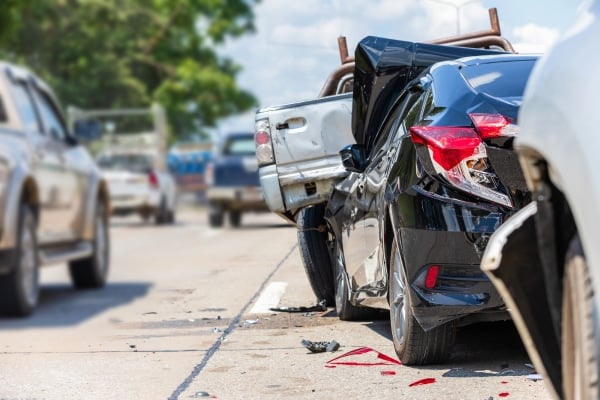
Rear-end collisions involving three cars are more complicated than a typical two-car accident. At Davidoff Law, we understand that multi-car accidents often create a chain reaction that can complicate determining liability.
Many people ask, "who is at fault in a rear-end collision involving 3 cars?" The answer is complex. The last driver isn't always solely at fault, as responsibility can be shared when a front driver stops abruptly or a middle driver is distracted.
Our experienced car accident attorneys examine police reports, witness statements, and the accident scene to figure out which drivers or multiple parties may be responsible. By thoroughly investigating, we help the injured party secure fair compensation for personal injury, lost wages, and vehicle damage.
Table of Contents
The Basic Rules of Fault in Rear-End Collisions
Before addressing a three-car collision, it is important to understand the basic rules of rear-end accidents. In a two-car rear-end collision, the rear vehicle is usually presumed negligent. This presumption arises because traffic laws require drivers to maintain a safe distance and remain alert. However, this is only a starting point for determining liability, especially in multi-car crashes where more than two cars are involved.
The Presumption of Negligence on the Rear Driver
In a rear car accident, the rear driver is often assumed at fault because they failed to stop in time. This can happen if the rear driver was distracted, driving too fast, or following too closely. Even if the lead driver stops suddenly, the rear driver still bears some responsibility unless other factors exist.
In multi-vehicle accidents, the middle car can also share fault if it hits the lead car and causes a chain reaction. Comparative negligence laws or the modified comparative negligence rule may adjust the percentage of fault for each driver. We carefully review insurance claims, police reports, and the accident scene to determine fault for multiple drivers. Our goal is to ensure that the injured party can recover compensation fairly.
Common Defenses to the Rear-End Presumption
A rear driver may argue they were not entirely at fault. Some common defenses include:
- The lead driver stops suddenly without warning.
- A mechanical failure, like faulty brakes, prevented a timely stop.
- Erratic driving by the front driver contributed to the accident.
- Another third vehicle cut in, creating a multi-car crash or chain reaction accident.
In three-car rear-end collisions, each driver's actions and vehicle behavior are analyzed to shift liability if appropriate. The front driver's actions or the middle driver's reaction can reduce the rear-most driver’s liability.
Insurance companies often use these defenses to minimize payouts, but our car accident lawyers challenge these arguments to protect the injured party’s rights. We also make sure personal injury claims and insurance claims reflect lost wages, medical bills, and vehicle damage fairly.
How a Three-Car Pileup Changes Everything
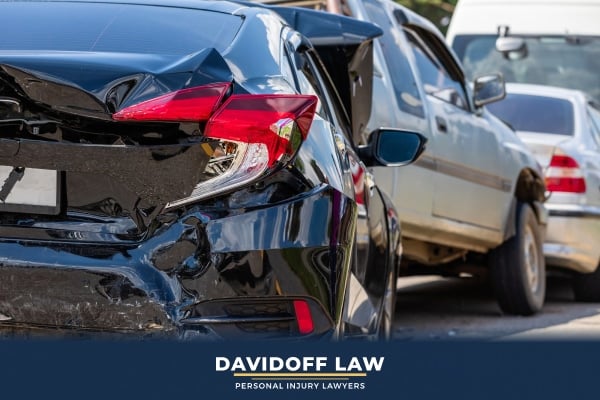
A three-car crash is more complex than a simple rear-end collision. In a multi-vehicle accident, multiple drivers and vehicles involved create a chain reaction that makes fault in a rear-end collision harder to determine.
In multi-car collisions, it is not always just the rear driver at fault. Driver's negligence, erratic driving, and the actions of the lead vehicle can all affect who is at fault in a rear-end collision involving three cars.
At Davidoff Law, we carefully study the accident scene, the vehicles involved, and police reports to identify the at-fault party. We also advise injured parties to seek medical attention immediately and document their injuries for personal injury claims.
The Concept of Multiple Impacts and Causation
In a multi-vehicle crash, each collision can have a separate cause. Driver A might hit the second car, while driver B might cause the rear vehicle to crash into the middle car. The front car may also contribute if it stops suddenly or maneuvers unexpectedly.
Our experienced car accident attorneys examine each impact point to figure out which driver’s negligence caused the damage. Understanding causation is key to recovering financial compensation and filing insurance claims fairly in a three-car accident.
Why the Middle Car is Often in a Difficult Position
The middle driver in a collision involving three or more cars is often in a tricky spot. The middle car can be hit from the rear and pushed into the lead vehicle. In these cases, fault may be shared between the rear driver and the middle driver, depending on the comparative negligence system in the state.
We review driver actions, police reports, and witness statements to determine the proper allocation of responsibility. Our goal is to ensure that other drivers do not unfairly shift fault onto the middle driver and that the injured party can secure fair compensation through their insurance claim.
Common Crash Scenarios and Fault Determination
Multi-vehicle collisions often follow predictable patterns, but fault in a rear-end collision can vary depending on how the accident unfolds. Knowing the common scenarios can help you understand who may be at fault. At Davidoff Law, we evaluate every driver, vehicle, and sequence of events to ensure all at-fault parties are identified.
Scenario 1: Car C hits Car B, pushing it into Car A
In this three-car accident, driver C may be primarily responsible for the initial rear-end accident. Driver B is hit from behind and may be forced into the first car. Depending on the front car's behavior, driver A may share a small portion of fault in the rear. We assess driver actions, vehicle damage, and witness statements to determine each party’s liability. This ensures fair compensation for injuries and lost wages.
Scenario 2: Car B hits Car A, then Car C hits Car B
Here, driver B causes the initial crash with the lead vehicle, but driver C still contributes by hitting the second car. In this multi-vehicle crash, fault may be split between driver B and driver C under the comparative negligence system. We carefully gather insurance claims, police reports, and evidence from the accident scene to establish financial responsibility for all drivers involved.
Scenario 3: Car A stops suddenly, Car B stops safely, Car C hits Car B into Car A
In this three-car rear-end collision, the first driver does nothing wrong by stopping, and the second driver manages to stop safely. The rear-most driver, driver C, may be the at-fault party for causing the chain reaction accident. Even so, the front car’s actions and the middle car’s position are considered under the comparative negligence system.
At Davidoff Law, we make sure multi-car crash claims properly reflect each driver’s responsibility and help the injured party recover compensation for personal injury and lost wages.
Scenario 4: A "Wave" Effect with Multiple Points of Impact
Sometimes, a multi-car collision causes a wave effect where three or more cars collide in sequence. The rear vehicle might hit the middle car, which then strikes the lead car, creating multiple points of impact. Each driver’s negligence is analyzed to determine fault in a rear-end collision and the at-fault parties.
We investigate thoroughly, using insurance claims, police reports, and witness statements to ensure the injured party gets financial compensation from all responsible drivers involved.
The Critical Role of Evidence in 3-Car Pileups
In a multiple vehicle accident, stories from the drivers involved often conflict. Collecting objective evidence is the best way to determine fault and identify the at-fault party. At Davidoff Law, we carefully review every piece of evidence to ensure all drivers in a multi-car crash are held responsible for their actions. Evidence helps us protect your right to fair compensation and strengthens your personal injury claim.
Police Report Analysis and Officer Observations
The police report is often the first key piece of evidence in a multi-vehicle accident. We examine the officer’s observations, sketches of the accident scene, and any noted traffic violations. This helps us understand how the first driver, the second driver, and the third driver may have contributed to the three-car crash.
Eyewitness Testimony from Neutral Third Parties
Witness statements from neutral parties can clarify what really happened. Third parties may see vehicles involved, the sequence of impacts, or which driver acted negligently. At Davidoff Law, we collect these statements early to strengthen your case and protect your right to financial compensation.
Damage Analysis and Vehicle Positioning
The position of the cars after the crash shows the direction and force of each impact. Examining vehicle damage helps determine who hit whom first and which driver’s negligence caused the multi-vehicle crash. This is especially important when multiple cars are involved and the chain reaction makes fault unclear.
Event Data Recorders (EDRs/"Black Boxes") and Dashcam Footage
Many modern cars have black boxes that record speed, brake use, and acceleration. Dashcam footage can also show the crash as it happened. We use these tools to clearly show the actions of the first driver, second driver, and third driver, helping you recover financial compensation in a multi-car collision.
Understanding Comparative Negligence in Multi-Vehicle Crashes
In New York, fault in a multi-vehicle accident can be shared between multiple drivers. Your financial compensation may be reduced by your percentage of fault. At Davidoff Law, we carefully review the accident scene, police reports, and vehicle positioning to assign fault accurately. Understanding how comparative negligence works is key to securing fair compensation in three-car accidents.
How New York's Pure Comparative Negligence Law Works
New York follows a pure comparative negligence system. This means that if you are partly at fault, your recovery is reduced by your percentage of responsibility. For example, if your personal injury claim totals $100,000 but you are 20% at fault, you may only recover $80,000. We help our clients understand how the law applies in multi-vehicle crashes.
Examples of Shared Fault
Fault can be shared in many ways during a three-car rear-end collision:
- Car A stops suddenly and unexpectedly.
- Car B is following too close.
- Car C is speeding and hits Car B, pushing it into Car A.
We assess all drivers involved, including the third driver, to determine liability accurately.
How Insurance Companies Assign Percentage of Fault
Insurance companies assign percentages based on police reports, damage analysis, witness statements, and sometimes EDR or dashcam data. At Davidoff Law, we challenge unfair fault assignments and fight for full recovery.
By identifying all at-fault parties, including other drivers in a multi-car crash, we help you maximize your financial compensation. We offer a free consultation to review your three or more car accidents and explain how we can help you recover.
The Challenges of Dealing with Multiple Insurance Companies

In a multi-car accident, victims often have to deal with multiple insurance companies. Each insurer may try to blame the other drivers to pay less. This can make a three-car crash or multi-vehicle accident confusing and stressful. At Davidoff Law, we guide our clients through these challenges so they can focus on recovering from their injuries.
How Adjusters Try to Shift Blame to Other Drivers
Insurance adjusters often try to shift liability to another driver. In a three-car accident, the first driver, the second driver, and the third driver may all hear claims that the other drivers caused the crash. This is why we carefully analyze police reports, vehicle damage, and witness statements to determine fault.
The Risk of Giving Recorded Statements Without Counsel
Insurance companies may ask you to give a recorded statement about the accident. Answering without an attorney can lead to statements that unfairly shift blame. We advise clients to seek legal guidance first. With our help, you can protect your personal injury claim and financial compensation from being reduced by comparative negligence rules.
Why You Need an Attorney for a Multi-Car Accident Claim
Multi-car collisions are often more complicated than they seem. Determining the at-fault party requires understanding traffic laws, drivers’ actions, and the accident scene.
At Davidoff Law, we help multiple drivers secure fair compensation for injuries, lost wages, and vehicle damage. Our experience in multi-vehicle crashes ensures no responsible party is overlooked.
Conducting an Independent Investigation to Establish Facts
We conduct our own investigation at the accident scene. We gather police reports, witness statements, and vehicle positions to clarify driver negligence. In a three-car accident, the first driver, the second driver, and the third driver may each share some responsibility. Our investigation helps identify the at-fault party accurately.
Negotiating with Multiple Adjusters Simultaneously
Dealing with multiple insurance companies at once is confusing. We speak with all the adjusters to protect your insurance claim. Our goal is to secure fair compensation for vehicles involved in the multi-car crash, including any financial losses you suffered.
Fighting to Minimize Your Assigned Percentage of Fault
Even if you share some fault, we fight to reduce your percentage of liability under the comparative negligence system. This ensures your financial compensation is not unfairly lowered. In multi-vehicle accidents, every driver’s actions, from the first driver to the rear-most driver, are carefully examined.
Contact Our Multi-Car Accident Lawyers Today For a Free Consultation
Time is critical in a multi-vehicle crash. Evidence disappears and memories fade quickly. You should not face multiple insurance companies alone. At Davidoff Law, we provide a free consultation to investigate your three-car rear-end collision, determine the at-fault party, and advise on the best course of action.
We will handle all communications with the insurance companies and fight for your personal injury claim and financial compensation. Contact us today to ensure no responsible driver is overlooked in your multi-car accident.

Ruben Davidoff, founder of Davidoff Law, established his practice in 2012 after moving to Queens in 1988 and beginning his legal career in 1997. Admitted in NY State and the US District Court for the Eastern District of NY, he has extensive experience in personal injury, handling various cases like airline crashes, auto accidents, and slip/trip and fall cases. Mr. Davidoff provides personalized attention, recovering millions for clients through settlements or verdicts, leveraging decades of experience.