This page was written, edited, reviewed & approved by Ruben Davidoff following our comprehensive editorial guidelines Ruben Davidoff ,the Founding Partner, has 30+ years of legal experience as a New York personal injury attorney.

New York laws on following distance and rear-end liability help determine who is responsible in a rear-end collision. The following distance is the space a driver maintains behind the vehicle ahead, and it matters because most rear-end crashes occur when a trailing driver follows too closely. National reports show that tailgating plays a major role in many car accident cases and often leads to serious injuries. Rear-end accidents are common in busy areas like New York City, where sudden stops, heavy traffic, and constant lane changes raise the risk. At Davidoff Law, we help injured drivers understand their legal rights and seek fair compensation after a rear-end car accident.
Table of Contents
Understanding New York’s Following Distance Regulations
New York traffic laws require drivers to follow the vehicle ahead at a “reasonable and prudent” distance under VTL §1129. This rule does not set a fixed number of feet, because safe space depends on speed, weather, and road conditions. In a motor vehicle accident in which the rear vehicle strikes the lead vehicle, the rear driver is usually treated as the at-fault party. Still, this is a rebuttable presumption, meaning the rear driver may prove that the front driver acted in a way no one could have expected.
We explain these rules to accident victims in this no-fault state and guide them through the claims process.
- Following Distance Requirements (VTL §1129): Drivers must leave enough space to stop safely in changing conditions, such as heavy traffic or bad weather. This flexible rule helps prevent rear-end collisions and encourages drivers to stay alert.
- Rear-End Liability Presumption: Courts presume the rear driver caused the crash because they should have maintained a sufficient distance. This can change if the lead car stops suddenly, has faulty brake lights, or acts in another unsafe way.
- Comparative Negligence and Shared Fault: New York follows pure comparative negligence, so even the at-fault party may recover some damages if they were only partly responsible. The court reduces compensation based on each driver’s share of blame.
Factors That Influence Safe Following Distance
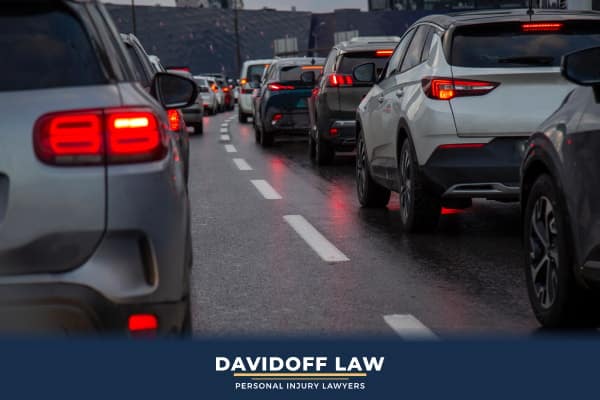
Safe distance depends on changing road and traffic conditions.
Weather and Road Conditions
Wet roads, ice, snow, and fog require a trailing driver to leave more space. Reduced traction and low visibility make it harder to stop in time. We show how poor conditions affect the driver's rear-end responsibility in many rear-end crash cases.
Speed and Traffic Flow
Higher speeds require more distance because stopping takes longer. Heavy congestion in New York increases sudden braking, sudden lane changes, and stop-and-go movement. These conditions make rear-end collisions more likely when drivers fail to slow down.
Driver Reaction Time and Visibility
Reaction time varies based on focus, lighting, and visibility. Distracted driving and non-functioning brake lights on the lead vehicle also affect crash risk. We review police reports and traffic camera footage to learn how visibility shaped the collision.
Why Rear-End Collisions Are So Common in New York
Rear-end crashes are common because many parts of New York force drivers into tight spaces and require quick decisions. Stop-and-go traffic, busy roads, and constant merging increase the risk of hitting the lead vehicle. Many accidents happen when a rear-end driver is distracted or following too closely. Pedestrians, cyclists, and buses also cause sudden stops that catch trailing drivers off guard.
Common causes include:
- Heavy congestion: The high volume of cars leads to back-to-back braking and sudden slowdowns.
- Distracted or aggressive driving: These actions shorten reaction time and raise crash risk.
- Frequent turns and crosswalks: Drivers brake hard to avoid pedestrians, causing rear-end collisions.
The Presumption of Liability in Rear-End Accidents

In a collision in New York, the rear-ending driver is usually considered the at-fault driver. This rule exists because the rear driver's responsibility includes keeping a safe distance and reacting in time. Rebutting this presumption is difficult, and insurance companies often rely on it to deny claims or reduce payments. To challenge it, we need strong proof of the front driver’s negligence or another clear cause. Our car accident attorneys help injured party clients collect the evidence needed to seek compensation and recover fair results.
Situations Where the Rear Driver May Not Be at Fault
Some exceptions under New York law may shift fault away from the trailing vehicle.
Sudden, Unexpected Stops by the Front Driver
A rear driver may not be liable if the front driver suddenly stops for no good reason. These stops often cause a car crash when there is no time to react. We review the official police report and witness statements to demonstrate that the stop was unsafe. This helps protect the trailing driver from unfair blame.
Front Driver Brake Failure or Mechanical Issues
If faulty brakes or brake lights on the lead vehicle caused the accident, the lead driver may be at fault. These issues reduce warning time and increase the likelihood of collisions. We gather repair records and vehicle damage reports to prove the failure. This helps support a personal injury lawsuit when mechanical issues played a major role.
Multi-Vehicle Chain-Reaction Crashes
Chain-reaction rear-end crashes can involve several parties. In these cases, one driver’s negligence may cause another driver to collide. We sort through each impact to see who caused the first movement. This helps us build clear claims for injured victims.
Evidence Used to Prove Fault in Following-Distance Cases
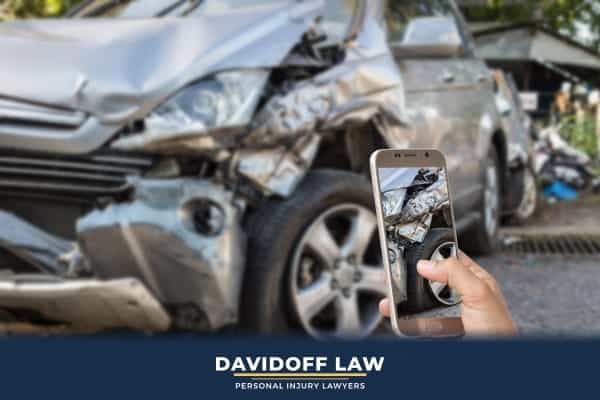
Strong evidence is essential to show how the car crash occurred and who caused it. We study every detail because following-distance cases rely on timing, space, and driver choices. This evidence also helps when filing claims under New York’s no-fault system or pursuing a personal injury lawsuit. By gathering clear proof, we help accident victims move toward fair compensation.
Important evidence includes:
- Dashcam footage: Shows movements of the rear vehicle and the lead driver.
- Damage patterns: Vehicle damage helps show speed, angle, and impact forces.
- Traffic camera recordings: Reveal sudden lane changes or unsafe braking.
- Witness statements: Support claims about the driver’s negligence or safe distance.
- Police reports: Add key facts about the scene and the parties involved.
- EDR data: Speed and braking information show how the collision formed.
Insurance Challenges in Rear-End Collision Claims
Rear-end crash cases often involve disputes with insurers. Some insurance companies argue shared fault or claim the injured party did not maintain a safe distance. Others rely on sudden-stop defenses to avoid paying full damages. We help clients respond to these tactics and protect their rights.
Common issues include:
- Shared fault claims: Insurers may try to reduce payments by blaming both drivers.
- Following-distance disputes: They question reaction time or driver conduct.
- Sudden-stop defenses: Insurers argue the front driver caused the impact.
- Legal support: Our car accident lawyer team helps clients file claims, deal with their own insurer, and navigate the legal process.
Compensation Available After a Rear-End Collision in New York

A rear-end accident can cause serious injuries and major financial loss. We help clients seek compensation for medical bills, lost wages, and long-term care needs. Some victims face traumatic brain injuries, neck injuries, broken bones, or ongoing pain. Our legal assistance helps injured victims understand their rights under New York’s personal injury protection PIP rules.
Possible damages include:
- Medical bills: Covers treatment, tests, and follow-up care.
- Lost income: Income lost during recovery or reduced ability to work.
- Pain and suffering: Compensation for physical pain and emotional distress.
- Property damage: Repairs or replacement of the vehicle.
- Rehabilitation: Long-term therapy or recovery support.
- Future care: Costs for continued treatment when injuries last.
Steps to Take After a Rear-End Collision in New York
Gathering evidence early helps protect your legal rights and supports your claim. These steps also help show how the crash happened and who should pay for the harm.
- Report the Accident and Seek Medical Care: Call the police right away so an official report can be created. Seek medical attention even if your pain seems mild, because some common injuries appear hours later. These records help prove your medical expenses and support efforts to recover compensation.
- Photograph the Scene and Document Vehicle Positions: Take photos of the vehicles, the damage, and the road. Include skid marks, brake lights, and the position of the cars after the crash. This evidence helps show who caused the collision and supports your statement to your own insurance company.
- Contact Davidoff Law Before Speaking With Insurers: Speak with us before giving statements to insurance companies, including your own insurer. Insurers may try to reduce payments or deny claims. We help you seek legal advice early, so your rights remain protected.
How Davidoff Law Supports Rear-End Collision Victims

Rear-end crash cases often involve many questions about fault, injuries, and insurance. We use our experience to guide clients through each step so they can focus on healing. Our personal injury attorney works to demonstrate that the rear driver caused the crash and that the victims deserve full compensation. We also help clients who carry personal injury protection understand how these benefits affect claims.
Our support includes:
- Thorough investigation: We gather police reports, witness statements, traffic footage, and photos of vehicle damage.
- Challenging negligence claims: We push back when insurers argue shared fault or try to use the sudden-stop defense.
- Evidence collection: We collect all necessary details to meet the serious injury threshold when required.
- Insurance disputes: We handle talks with insurance companies and fight for fair compensation.
- Claims and litigation: We prepare a strong case when a personal injury lawsuit becomes necessary.
Frequently Asked Questions
Usually yes, but not always. Fault may shift when the front driver creates danger through sudden actions or faulty brake lights.
No. Drivers must leave a safe distance in all conditions. The weather does not absolve the driver of the rear from their responsibility.
This may reduce the rear driver’s fault. We review evidence to see whether the stop was unsafe or unavoidable.
Yes. New York allows shared fault when both drivers contribute to the crash. We help show when the other driver played a role.
Neck injuries, back injuries, broken bones, and traumatic brain injuries are common injuries. Many victims need long-term care.
Call us as soon as possible. Early help allows us to protect your rights and prepare your claim.
Speak With Our New York Car Accident Lawyers for a Free Case Evaluation
If you were rear-ended or hurt in a collision in New York, we are here to help. Our car accident lawyers understand how to challenge rear-end liability disputes and explain your rights under New York law. We offer a free consultation and free case review so you can learn your options with no pressure. Contact Davidoff Law today for legal assistance and support in seeking the compensation you deserve.

Ruben Davidoff, founder of Davidoff Law, established his practice in 2012 after moving to Queens in 1988 and beginning his legal career in 1997. Admitted in NY State and the US District Court for the Eastern District of NY, he has extensive experience in personal injury, handling various cases like airline crashes, auto accidents, and slip/trip and fall cases. Mr. Davidoff provides personalized attention, recovering millions for clients through settlements or verdicts, leveraging decades of experience.